

There’s rich irony in the timelining of 1940s Chinese blockbuster The Spring River Flows East. Cai Chusheng and Zheng Junli’s melodrama dates its 14-year timespan – events unroll from 1931 to the end of the war in 1945 – with reference to the Chinese revolution of 1911 (titles read, “20 years after” etc), but the film’s social commentary is so acute that it’s no surprise that another, more far-reaching turmoil would hit the country, transforming it into the Communist People's Republic, just two years after the film's 1947 release. With hindsight, they should have been dating it in terms of “years before”.
The Chinese film industry picked up quickly after the Japanese surrender, and independent studio Kunlun, which made this heavy-hitter, was forthright in its social commitments, with a manifesto “to stand with the people, to expose… the pain and persecution felt by the people under this [KMT, Kuomintang] rule, and to promote the people's road of struggle.” Co-director Cai, a key figure of leftish cinema in the 1930s, was certainly receptive to Soviet influence (he’d won a prize with an earlier film at the first Moscow Film Festival in 1935): the distinction between the sufferings of the poor and the decadence of the bourgeoisie is more than rammed home.
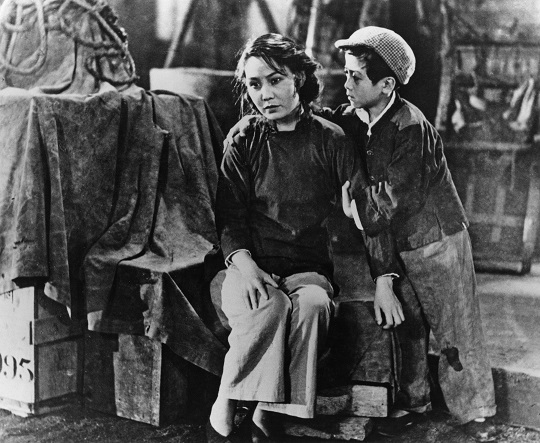 At the same time it’s a melodrama, as the film’s release slogan offered deliciously: “See the blood, rain and violent winds of China's wartime era through the relationship of one man with three different women.” At just short of three hours running-time (it was released in two distinct parts), it has the scale to make the most of the high passions of its story. Part one, Eight War-Torn Years, introduces the workers Sufen (Bai Yang) and Zhang Zhongliang (Tao Jin), whose marriage is disrupted by war. When the Japanese capture Shanghai – the city itself, memorably caught in a variety of guises, is an abiding presence in the film – Zhongliang ends up in the Nationalist capital, Chungking. His wife (and mother and son: the full dynasty) first suffers at the invaders’ hands in the countryside, before returning to poverty in the city.
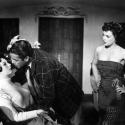
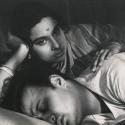
But it’s Zhongliang’s transformation from intrepid fighter to parasite capitalist (“heroic bear becomes cowardly dog”) that dominates part two, The Dawn. He’s seduced by Wang Lizhen (Shangguan Yunzhu, main picture), the femme fatale who is a complete contrast to his wife (Sufen’s name means “simple and chaste”, Lizhen’s “beautiful and precious”). Returning to now-liberated Shanghai, Zhongliang dallies further – a right hornets’ nest of passions ensues – before a tragic denouement (Sufen, played by Bai Yang, with her son, pictured above). Leftist melodrama was meant to avoid the American classic happy-end formula, and Spring River does so in spades. The title (the film is also known as The Tears of Yangtze) derives from a line of Sung poetry, “How much sorrow can one man have to bear? As much as a river of spring water flowing east.” Another irony: it’s not the men who really do the suffering here, though whether that gives Spring River a proto-feminist identity is probably a moot point.
Visually, at least, the dichotomy looks more complex. We may relish film references to Eisenstein and other comrades in the conflict sequences (though mass action scenes use archive footage), at the same time as enjoying some spectacular interiors that would make Hollywood set designers of the period proud. It all looks wonderful in the lucid black and white of this China Film Archive newly-restored print. The only extra in this BFI release, which continues a series of classic Chinese re-issues that started with Spring in a Small Town, is a minute-long 1937 English-language travelogue, A Stilted City. Chungking. China. “Stilted” refers to the style of the city’s river-bank construction, and it shows that, unlike in Cai and Zheng’s lavish feature, hard work was definitely not unknown there.





Add comment