Music, Wagner famously pronounced, is the art of transition. For the Swiss composer Michael Jarrell, by contrast, music is “the art of punctuation”. On the one hand, how to get from one thing to the next; on the other hand, how to separate one thing from the next. But in the end the problem is much the same: how do we make sense of large chunks of time that contain nothing but music?
Jarrell, whose work provided the focus for the first of two BBC “Portrait” concerts in Cardiff’s Hoddinott Hall, comes at this problem from a rather particular angle. Now in his early fifties, he worked for a couple of years in the 1980s at IRCAM, Boulez’s acoustic research institute in Paris, and evidently spent a good deal of time analysing sound spectra (the acoustic equivalent of the rainbow effect) and using the results as the basis for new and highly coloured instrumental textures.
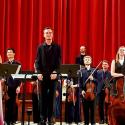
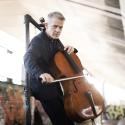
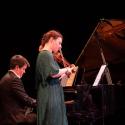
The trouble with this spectral music, as it’s called in the trade, is that it tells you about the colour and density of sounds and about subtle ways of changing them, but not much about where they might be heading, not much about form. And soon form disappears into virtual space. One work in this BBC programme was a piece for solo violin called Prisme, a dozen minutes of inert, attenuated doodlings, performed with every sign of concentrated precision by Lesley Hatfield, the leader of the BBC National Orchestra of Wales. But it so happens that Prisme is an abstract from a work for violin and orchestra called …prisme/incidences… (note the ellipsis and the lower-case lettering, both Boulezian traits).
I can’t bring myself to start a paragraph with this kind of title, but ...prisme/incidences... is a work of real brilliance and excitement (I’ve heard it). Prisme, on the other hand, is what you’d expect of a piece where, more or less, the accompaniment has simply been left out. Peter Reynolds’s programme note put it tactfully: “The work falls into a number of sections whose overall form is never revealed – shaped, as it were, by a memory of the original orchestral part.” And if you’ve no such memory?
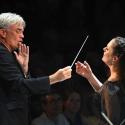
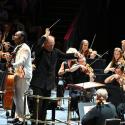
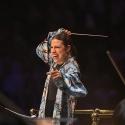
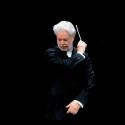
The orchestral pieces in the concert supplied the shadow of an answer. Give Jarrell a large body of first-rate players (the BBC NOW) and a sympathetic conductor (his compatriot, Thierry Fischer), and he will provide something as thrilling and instantaneous as a tidal wave or an avalanche. In fact his percussion concerto, …un long fracas somptueux de rapide céleste… (a quote from a novel by Julien Gracq), proved rich in violent cascades of orchestral sonority and glittering solo effects on the xylophone, marimba and various types of gong, dispatched with complete aplomb by Florent Jodelet. But it, too, tended to get becalmed; and it was fascinating to observe Jarrell’s solution to this problem: long, static episodes hovering around single notes while the other instruments tiptoed through the texture as if frightened of disturbing fallen masonry – beautiful but desolate.
Altogether less enervating was the purely orchestral …le ciel, tout à l’heure encore si limpide, soudain se trouble horriblement… (this time Lucretius), which somehow linked the violence and the tranquillity in a more convincing temporal design. And Jarrell’s orchestra constantly grabs the ear, whether through the metallic clatter of percussion, or the plangent wailing of the high woodwind, or the snarl of low brass or double bass. No doubt the titles say something about the structure, or lack of it, but they also help locate this music in a world of inexplicable catastrophes. And after all Debussy, who hated being asked what his music was about, sometimes captioned it with equally wayward labels, as if to say take it or leave it. Jarrell is in excellent company.
- The Jarrell Composer Portrait will be broadcast on Radio 3's Hear and Now on 23 October at 10.30 pm
- The next BBC Composer Portrait in Cardiff is on 27 October
- Visit Michael Jarrell's own website