

For those of us who have never thought much before about links between pantomime and Shakespeare, Fiona Laird’s new Merry Wives offers a chance to see how the combination works. Making short shrift of tradition, her version of the Falstaff comedy transports the action to a distinctly contemporary environment, with The Only Way Is Essex the most obvious cultural reference point, though there’s surely a touch of Albert Square, too. At its best, it manages a rambunctious energy and humour that should cut through the objections of purists.
Most such protests will be centred around its treatment of the text – in particular, the plentiful present-day interpolations – but Merry Wives is harder to defend as hallowed ground than most of the rest of the canon (and if you’re looking for comparisons, the Globe’s 2017 Romeo and Juliet surely still tops the recent bill for sheer artistic vandalism). There’s a new prologue, which could have come straight from Upstart Crow, in which a beleaguered (offstage) Shakespeare is instructed by Queen Elizabeth I, appearing via a nice piece of animation, to come up with something about Falstaff in love; he gets a deadline – two weeks – so it’s hack work, indeed.
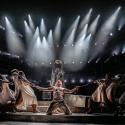
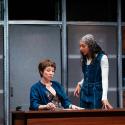
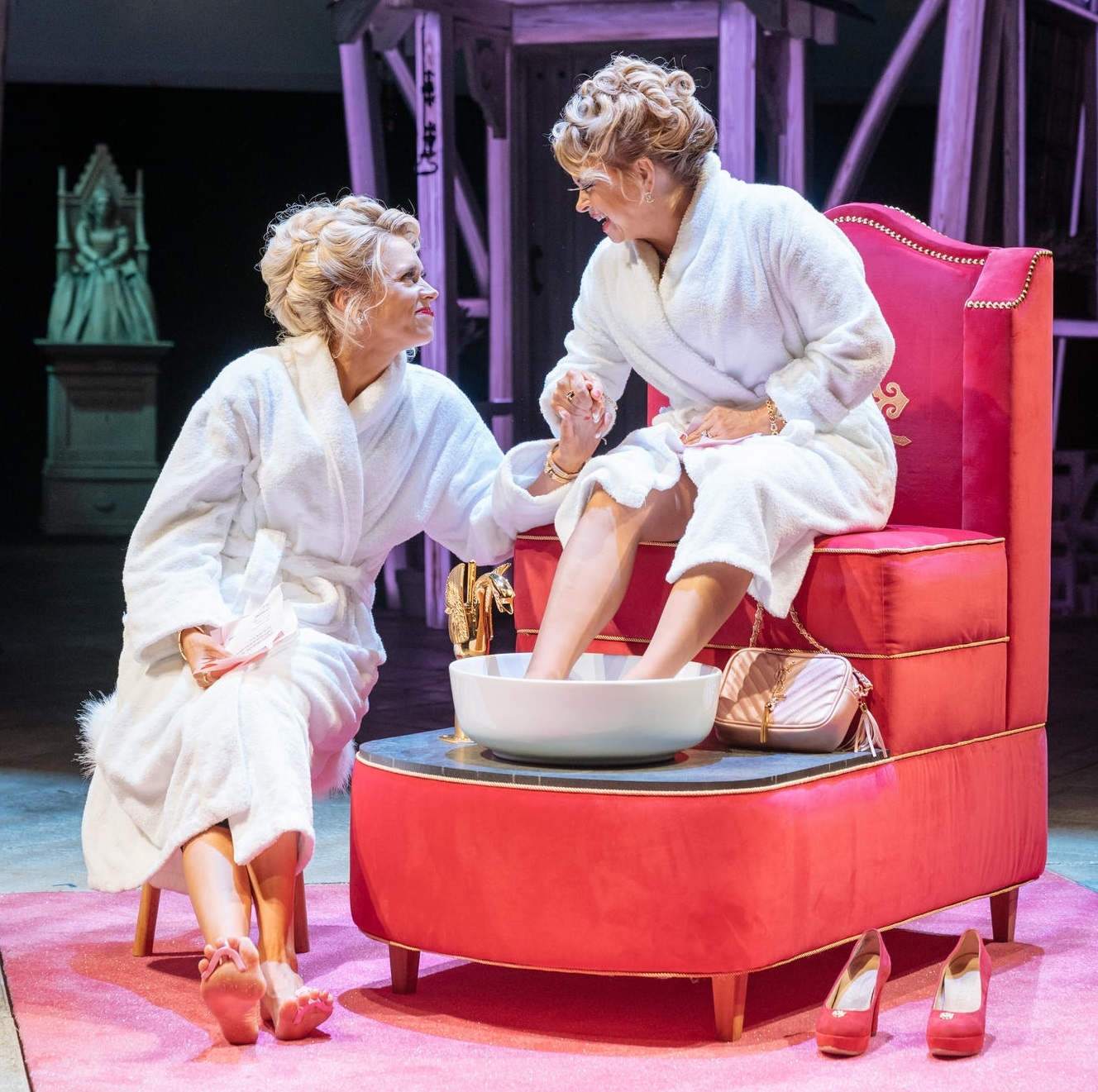 Laird follows that with an extensive dumbshow to introduce her characters, which hints towards a distinct ensemble style to come. That element is never quite realised, not least because it’s the women who dominate, by quite some distance. This may not exactly be an interpretation for the #MeToo era, but the element of feminism looks stronger than usual; it’s there especially in the busy pairing of Mistresses Ford (Beth Cordingly) and Page (Rebecca Lacey), Essex ladies down to their last lacquered toenail, who are never more at home than in the pampering spa where Falstaff’s double declarations of unlikely love first reach them (pictured above right, Beth Cordingly, Rebecca Lacey).
Meanwhile, the Garter pub is presided over by its hostess (Katy Brittain, channelling a whole range of prototypes from EastEnders’ Queen Vic, pictured below, right), and Falstaff’s sidekick Bardolph, similarly transposed in gender, happily takes up duties at the bar. There’s surely even a case of swapped sexuality too, with Afolabi Alli’s Pistol more screamer than blusterer, a change of orientation that gives a nice variation to the denouement's mystery partners resolution.
It’s an interpretation that adds an extra dimension to the sense of class structure that is there in the original: Merry Wives is Shakespeare’s only story located in a middle-class world, and also the only one more or less contemporaneous with his own time. Anne Page’s eventual successful suitor Fenton is “too great of birth” for the match, even as he admits that he was at first only looking to trade his status for the new money the Pages have clearly made in plenty. But at least he’s marriageable material – despite being given a stage tic that has him falling over each time he appears – particularly when compared to the dunderhead Slender and the prating Dr Caius (Jonathan Cullen). We may wonder how the movement in time allows the latter, so clearly the foreigner, to fit so comfortably into this Little England environment; particularly so when he gets one extra line, "quelle catastrophe, le Brexit", which would surely be the opposite of how local feeling might run on the dilemma de nos jours.
It’s up to the viewer to decide whether taste plays much of a role in appropriating such migrant material
That leaves us wondering about Falstaff (David Troughton), too. Can his offer to “make a lady”, in the old aristo sense, of his would-be conquests really mean much when the two women so clearly enjoy the luxury of their distinctly nouveau world, one complete with a swimming pool that adds extra stage business to an already busy action. In fact, there’s a convincing dynamic, rather out of Footballers’ Wives, in the Ford coupling, Cordingly clearly relishing every opportunity to get the better of her jealous hubbie (Paul Dodds).
Troughton’s Falstaff is rotund even by the standards of the role, which gives extra hilarity to attempts to conceal him in the first disguise scene as he struggles to climb into the fetid wheelie bin that here replaes the laundry basket (those two words, wheelie bin, get some delicious later repetitions, relished with a sense of incongruity that is a match for Lady Bracknell’s handbag). There’s certainly panto freedom to the addition of surtitle conversations between the two (presumably Romanian) porters who bundle him away: it’s up to the viewer to decide whether taste plays much of a role in appropriating such migrant material, or indeed for Falstaff’s second disappearance as a Mme Popescu, that notional witch’s surely Transylvanian origins adjusted here from Brentford to Brentwood (Essex, geddit).
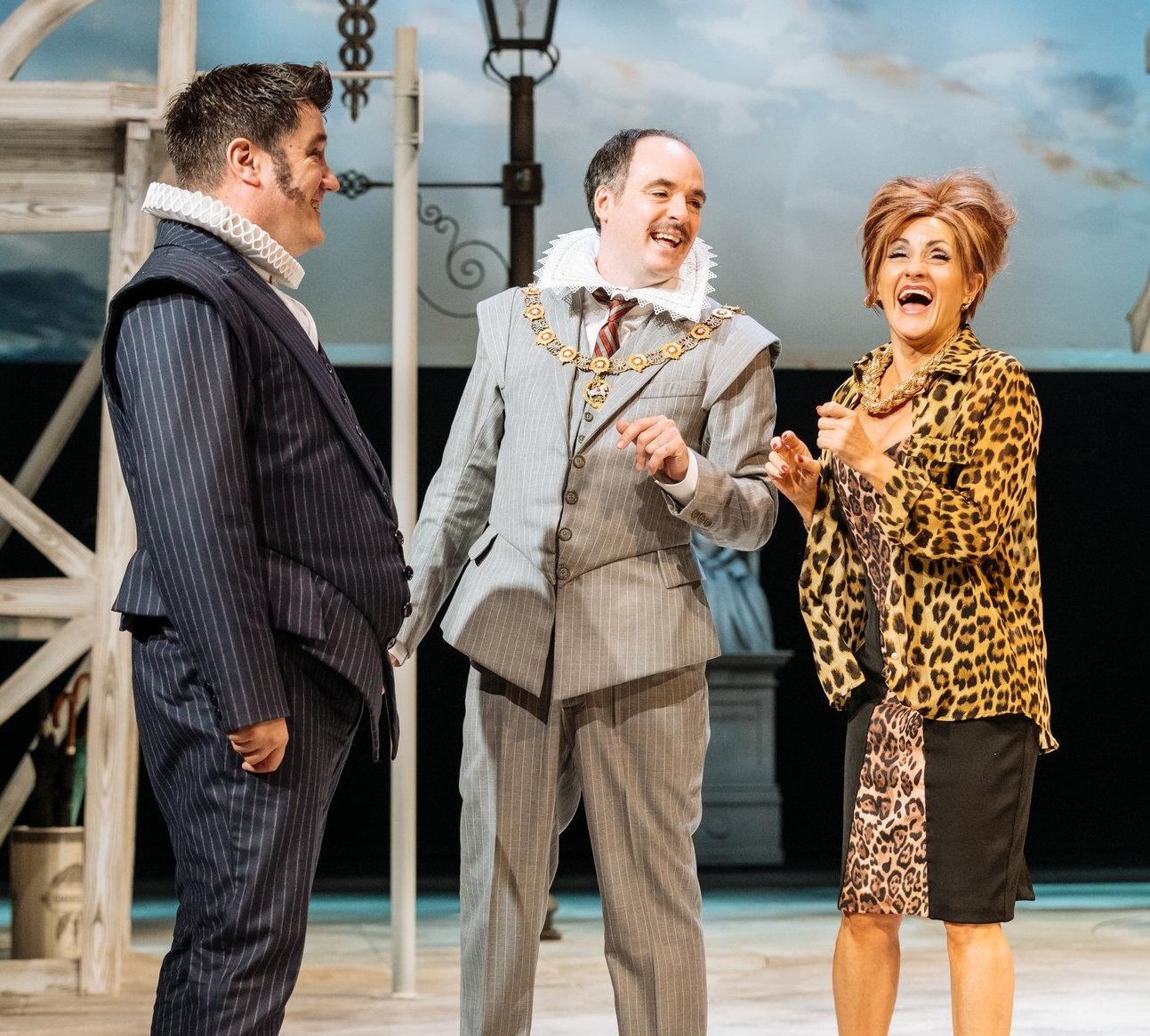 After a while, it becomes rather remorseless, the production’s frame of reference directed towards an almost parodic lowest common denominator, whether that’s Sir Hugh calling for more “Welsh welly” in the sing-along to “Bread of Heaven” that he compères, Ford disguising himself as an over-accented Russian secret agent, or even the self-propelling golf trolley that indicates what has replaced hawking as the leisure activity of choice in these climes. It leaves the impression at times that Troughton is playing in a different register, according him a gravitas that is perhaps not his due. He comes on after the interval, dignity in tatters after that filthy canal dunking, to muse about his “alacrity in sinking”. It's such a glorious phrase, how it brings home the richness of the text: the comedy is there already – what does talk of giving him a “comb-over” straight after that really add?
There’s every reason to dust down the Shakespearean canon from time to time, and this Merry Wives certainly lets the fresh air in. Troughton and his would-be paramours are particularly good out of a uniformly accomplished cast, while Lez Brotherston’s costumes blend Elizabethan period touches cleverly into contemporary style, and some garish lighting choices work nicely with his always inventive set. The audience loved it; I couldn’t help wondering whether anyone in the cast might have been hankering to rein it in, just a little.
- The Merry Wives of Windsor at the Barbican to 5 January
- Read more theatre reviews on theartsdesk





Add comment