Based on a short story by Gogol, Alexander Medvedev’s libretto for Mieczysław Weinberg’s The Portrait was originally conceived for Shostakovich. It was subsequently passed to Weinberg, who finished his opera in 1980. It’s a bleak, Faustian tale of a struggling artist who buys the eponymous painting, after which material success is mirrored by moral collapse.
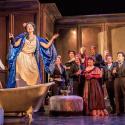
You can’t help making comparisons between Weinberg’s musical style and that of his mentor. It’s audible in the staccato wind writing and angular string lines in the first act. Weinberg’s gift is for suggesting character with the most economical of means – a pinched horn solo or a splash of tuned percussion - and the scene where the artist Chartkov’s rich clients arrive to a sequence of bare-boned waltzes, marches and minuets is technically brilliant. It’s a stand-out moment, though – there are a few too many musical longueurs in the first half.
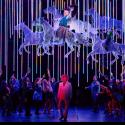
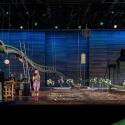
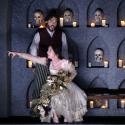
A work like this needs vibrant staging to give it support, and thankfully David Pountney’s staging (the first production of a Weinberg opera in the UK) is a thing of wonder. You catch your breath during the Lamplighter’s opening soliloquy, with a battery-illuminated Nicholas Sharratt suspended high above the stage, and Dan Potra’s squalid designs easily suggest the physical chaos, disorder and dust of an artist’s studio. Paul Nilon is suitably bedraggled in his opening scenes as the artist Chartkov; after purchasing the cursed portrait (here a broken mirror) it’s compelling to watch him change physically as his self-confidence starts to grow.
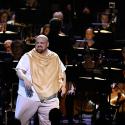
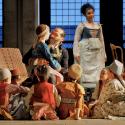
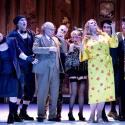
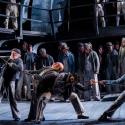
Chartkov remains an outsider, an innocent, and Pountney’s decision to have him literally dwarfed by grotesques on stilts is simple but brilliant. The way in which characters move is a constant diversion: Peter Savidge’s crimson-clad journalist arriving on a wire and clambering around the stage like an insect, or Katherine Broderick’s unfortunate Liza, three feet tall and spinning around on wheels. “On no account must you portray her as she is!” sings her mother, a condition which Chartkov is happy to obey.
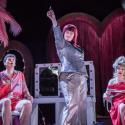
Fun though all this is, the second act offers much richer rewards. Weinberg’s music at last takes flight and there’s a richness and depth to the orchestral textures, an abundance of tolling harp and bell sounds which convey just the right sense of impending doom. Pountney’s staging drags us out of the 19th century into bright, modern light, incongruously showing us Chartkov’s portraits of a Stalin lookalike before he himself becomes an Andy Warhol figure.
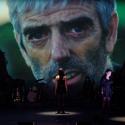
Having squandered his 15 minutes, Chartkov’s demise is stunningly chronicled; filmed close up by his wordless muse Psyche, his likeness projected live onto the back of the stage. It’s rare to see a singer’s face in close-up during an opera performance, and Paul Nilon is a good enough actor to make the sequence heartbreaking.
This is a strange, unsettling opera. There are no significant roles for women, and most of the characters are unsympathetic. Richard Burkhard is appealing as Chartkov’s assistant Nikita, and the orchestral playing under Rossen Gergov is highly assured, making Weinberg’s score sound like standard repertoire. Watch out for the visual joke in the closing seconds.
Who was Mieczysław Weinberg? Watch Davids Pountney and Fanning explain