

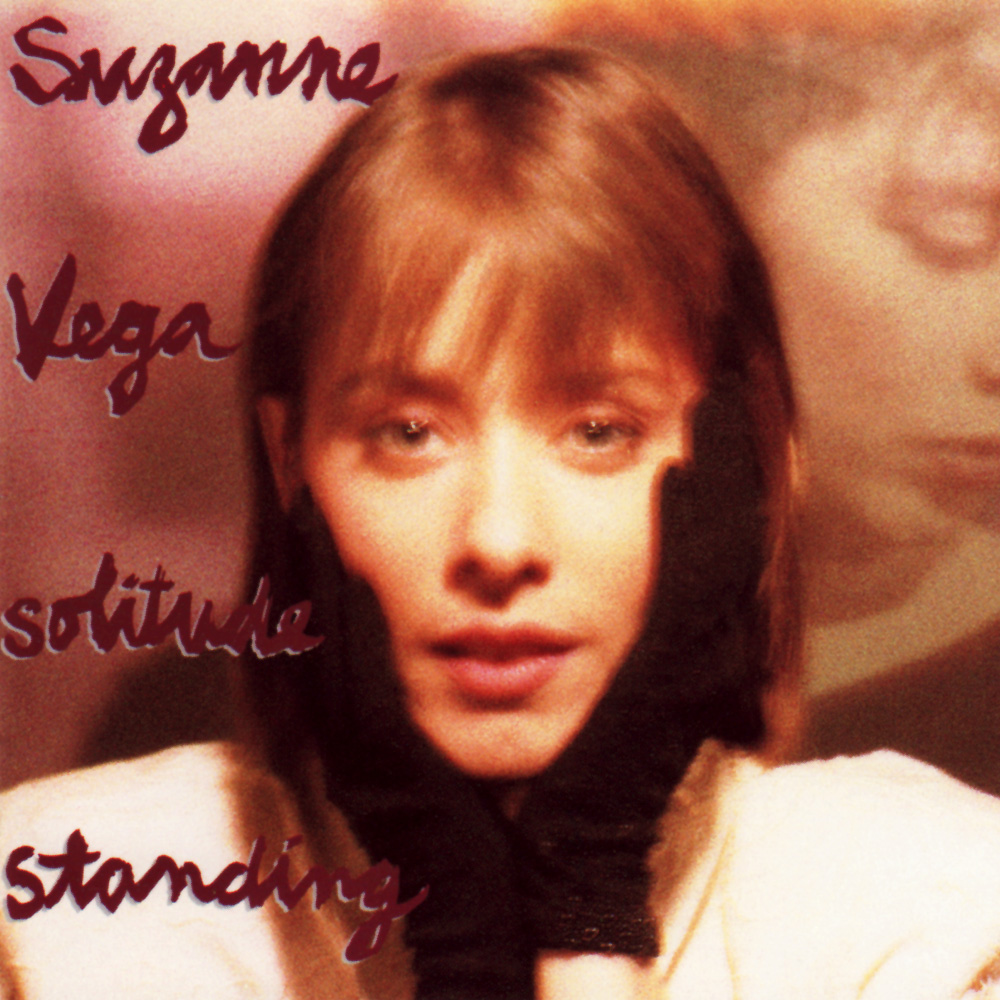
This year it’s been all about 50th anniversaries. If 1962 was a cultural foundation stone, it’s unlikely that 1987 will inspire quite so much in the way of plaques and bunting. It is, however, 25 years since Suzanne Vega released her definitive second album, the platinum-selling Solitude Standing, and last night at the Barbican she completed a short series of concerts – the others were in Boston and two in her native New York – to mark its birthday. This being Vega, it was a wry, modest, sideways type of celebration.
The main business of the night was a complete performance of Solitude Standing from soup to nuts. Thus the show began where all her performances used to, with the a capella “Tom’s Diner”, which has lost none of its power to hypnotise. And nor has Vega’s breathy alto, which without instrumental backing somehow supplies its own dynamics. Her sparse band – drums, bass and Gerry Leonard coaxing an intoxicating array of soundscapes out of his guitar - clattered in on “Luka”.
The band trooped off and left Vega to showcase her delightful picking style
Her song about a child petrified into silence by domestic terrors has always marked out Vega as a humane observer who peers into the darker corners. But as the charming stories introducing each song suggested, a quarter of a century ago Vega was getting her inspiration from all sorts of odd places: Paul Eluard, The Odyssey, Philip Glass, the story of Caspar Hauser, summer camp in the Adirondacks. The familiar tunes came and went. Heard in order live, they made a case for Vega as a songwriter with a much wider melodic palette than the best loved songs would suggest. Fey and even twee on “Ironbound/Fancy Poultry” and “Night Vision”, she can also do creepy and weird (“In the Eye”), angular and jerky (“Calypso”, “Solitude Standing”), and of course blissfully romantic.
 The highlight of the evening was “Gypsy”, the lyrically dazzling love song she wrote to a boy from Liverpool she fell for the summer she turned 18, drawn to him by their joint love of Leonard Cohen. And 35 years later, she revealed, he was in the auditorium to hear himself serenaded. This was a rare moment in which the band trooped off and left Vega to showcase her delightful picking style. However impressive, you furtively sense that all instrumentation for a pure folk singer like Vega is ornamental clutter.
With the thumping “Wooden Horse (Caspar Hauser’s Song)” Vega brought the official task of the evening to a close (“Right, that’s the album”) and seemed almost imperceptibly to loosen up. Someone started working the lights, and she threw on a Dietrich-tribute topper to knock off “Marlene on the Wall”. There were two songs she wrote for movie soundtracks. A haunting “The Queen and the Soldier” nodded to her gift for old-style balladry. To round proceedings off there was a surprise appearance from classical trumpetrix Alison Balsom, in stack heels even higher than Vega’s. She parped through a mute which left her contribution slightly shrouded, especially on the thumping reprise of “Tom’s Diner”.
Amazingly Vega forgot the lyrics for the song she must have sung far more than any other and, reduced to fits, had to start again. Perhaps she was distracted by the presence of the thin, pale boy from Liverpool, who was treated along with the rest of us to another song with “In Liverpool”, which she wrote when years later the success of Solitude Standing took her to his doorstep.








Add comment