

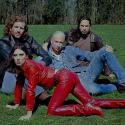
This rambunctious German-Swiss trio is used to selling out much larger venues at home. Their overdue EFG London Jazz Festival debut, in an enthusiastic but not full Kings Place, introduced British audiences to an exhilarating take on the acoustic jazz trio. This is a wolf in sheep’s clothing, a brilliantly, brutally eclectic ensemble that pushes the language of jazz to new limits of originality, and does so with irresistible energy, and a refreshing sense of fun.
One of Wollny’s trademarks is his choice of inspiration, which extends far beyond the usual jazz canon, in both directions, from the French medieval composer Guillaume de Machaut, through the contemporary classical repertoire and film music to the vanguard of art pop (Björk and the Flaming Lips regularly feature). He appears to enjoy eviscerating pieces generally considered smoothly impregnable, in order to smear their harmonic entrails before a flabbergasted audience. On Friday night (live at Pizza Express for Radio 3’s Jazz Now) he did this with Barber’s "Adagio", performing with French accordionist Vincent Peirani, a duo which occupies a different sound-world from his trio, but employs the same vigorous stylistic miscegeny.
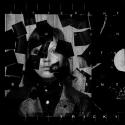
Most of last night's programme was from last year’s album Nachtfarhrten (“night journeys”). It began with a version of Machaut’s “De Desconfort” - not that you would necessarily guess from the piece itself. Opening with a fierce improvised exchange, it continued with a kind of guerilla war taking place between players, as brief passages of tranquillity spontaneously combusted into forceful melody or spiky experiment. Alongside a series of originals by Wollny and his band members, the set ended with a version of Hindemith's “Rufe in der horchender Nacht” from his collection "Dreams and Experiences", or In einer Nacht. The resemblance was fleeting, however, as the trio overthrew the original’s stately introspection with more insurgent disruption.
Wollny has learned some lessons from pop balladeers
As pianist, Wollny is relentless: each subtle change of tack is pressed forward like an assault, while pounding the keys with his elbows, or strumming the strings under the lid. Bassist Christian Weber and drummer Eric Schaefer follow suit, Schaefer (playing drums and assorted percussion) with a meticulous intensity that sporadically explodes into marching-band assertiveness. Weber, like Wollny, pushes his instrument to its technical limits, tapping anything that will make a sound. His pizzicato-glissando bouncing-spring-effect on the Hindemith was glorious.
Taken in isolated passages, each element of their performance has clear musical ancestors, but as a whole - an extravagantly polyglot musical collage - it’s bracingly original. Overall, each piece has a narrative arc, and Wollny is not ashamed to massage an emotional response from his audience: brittle dissonance makes way for lush harmony in an instant, and Wollny has learned some lessons from pop balladeers, though the route by which he reaches pay-off is far more convoluted.
The piano trio is one of jazz’s most versatile formations, and is often the vehicle for successful crossover acts such as E.S.T. or GoGo Penguin, the piano-drums alliance allowing for both driving rock rhythm and sweeping balladic melody. Wollny provides both - but that’s only the start. In the English-speaking jazz world, Wollny is less prominent than Robert Glasper or Kamasi Washington, whose inclusive experiments with a new lexicon of jazz have greatly invigorated the scene. He bears comparison with them, however, for using the full range of the European musical tradition in the way they use hip-hop and John Coltrane.
British pianist Andrew McCormack gave the solo first set. McCormack is an even more polymorphous musician than Wollny, with everything from solo work to large-scale orchestral collaborations. (His new project, Graviton, with Eska, Shabaka Hutchings, Anton Eger, and Robin Mullarkey, seems likely to be one of the events of next year.) Stylistically, however, he’s a little more restrained, his tumbling, slightly Jarrett-esque compositions a less startlingly novel. Perhaps his most notable strength - the opposite of Wollny - is the delicacy of his tonal variation, employed in a series of wistful vignettes such as “Dreamcatcher” or “Antibes”. His last piece, a tribute to Hitchcock and film noir, offered a slightly different palette, with a clever kind of pastiche featuring comically schlocky bursts of staccato. It’s a variation we should hear more of in future.





Add comment