

The Brighton Festival, which takes place every May, is renowned for its plethora of free events. The 2017 Festival is curated by Guest Director Kate Tempest, the poet, writer and performer, alongside Festival CEO Andrew Comben who’s been the event's overall manager since 2008 (also overseeing the Brighton Dome venues all year round). This year the Festival’s theme is “Everyday Epic”.
film interviews
Jasper Rees

David Storey, who has died at the age of 83, was the last of the Angry Young Men who, in fiction and drama, made a hero of the working-class Northerner. His father spent his life down a Yorkshire pit, and out of guilt that he belonged to an educated post-war generation which ducked the same fate, Storey would always see his career as a daily series of grinding shifts mining black stuff from the seam of his own soul.
Jasper Rees

In Radcliffe, an early novel by David Storey, one character murders another with a telling blow from a hammer. The author was later advised that Kenneth Halliwell was reading Radcliffe on the night in 1967 before he killed his lover Joe Orton, also with a hammer. But however many Orton plays Storey indirectly lost, he pulped many more of his own.
Nick Hasted

Olivier Assayas was born into French cinema, as the son of screenwriter Jacques Remy, but his three acclaimed decades as a director have followed a mazy course.
Jasper Rees

Gurinder Chadha is still best-known for directing a low-budget comedy set in Hounslow about two girls who just want to play football. Bend It Like Beckham (2002) introduced Keira Knightley and in 2015 became a stage musical that lured Asian audiences to the West End. While she also explored British Asian culture in Bride and Prejudice (2004) and It’s a Wonderful Afterlife (2010), in her new film she abandons light comedy to address the biggest and most decisive moment in Britain’s relationship with India.
Viceroy’s House is set in 1947 at the moment Lord Mountbatten arrived in Delhi to oversee the handover of India to its own people. Independence turned out to mean partitioning the country along religious lines, resulting in the migration of 14 million refugees across newly created borders. Among those migrants were Chadha’s paternal grandparents, who left their home in what became Pakistan. (The migration continued: in 1960 Chadha was born in Kenya and grew up in Southall, west London).
The film features the Mountbattens, played by Hugh Bonneville and Gillian Anderson, and the politicians arguing over the rights and wrongs of Partition. But it also dramatises the lives of the indigenous staff working in the eponymous palace, among them a young Muslim translator (Huma Qureshi) and a Hindu security guard (Manish Dayal) who fall in love across the religious divide. Viceroy’s House is a darker film than anything Chadha and her co-scriptwriter Paul Mayeda Burges have made before – lest we forget, she once directed Angus, Thongs and Perfect Snogging. It’s much more sumptuous to look at too. She tells theartsdesk what drew her to the material after avoiding it for many years.
JASPER REES: Why did you shun this story inspired by your family history for so long?
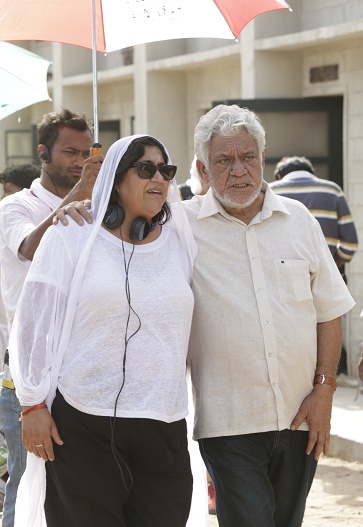 GURINDER CHADHA (pictured right on set with Om Puri): I just didn’t really have the courage. It’s a very sad part of my background. It was a very turbulent moment in our shared history, British and Indian, and there were a lot of people with very strong feelings about it and I just didn’t know if I could tell that story. It was only when I went to Pakistan for the first time to my ancestral town with Who Do You Think You Are? that I received such a warm welcome and really felt for the people who had moved into my grandfather’s house where my grandmother had left as a refugee in 1947. There were now five families who had moved in as refugees themselves. So I felt at that point that I really should do something on the Partition but from the people’s perspective.
A lot of people don’t know anything about this history - they don’t even know that Partition happened. I had to get a lot of information in in a way that would feel like proper storytelling. Then I got the idea to do it as an upstairs downstairs story – long before Downton Abbey happened. I wanted to tell the political story about Mountbatten negotiating with the leaders, but at the same time I wanted to see the effects of the decisions being taken upstairs on the ordinary people downstairs so I needed to build up the relationships with Mountbatten’s butler and valet and the translator and the chefs (see clip below).
The film is appearing at another moment of mass migration. Does that give the film extra impetus?
Absolutely. When we were shooting one of the refugee scenes I had 1,000 extras in a fort in Rajastan. That morning was the day the little Syrian boy’s body had been found washed up on a beach. We were at the height of the Syrian refugee crisis. Every day we’d see that on the news and on our phones but then go out and shoot refugees in the film.
And how it might land on a cinema-going audience?
We live at a time where people are trying to divide us instead of looking at real issues of unemployment and economic stability for ordinary working people. I think that what the film really does is provide a timely reminder of what can happen when you start scapegoating different groups and how quickly that can escalate into terrible violence and death. It can just happen overnight. And that’s what happened in 1947.
You have a fictional relationship at the heart of the film between a Muslim woman and Hindu man, and there’s a lot of dialogue between the Mountbattens and their Indian staff. Did you feel that, in order to animate the canvas, characters had to speak to one another in a way they possibly mightn’t have in reality?
Absolutely, I was looking for interactions between the upstairs and downstairs. I was looking for what would have been real. Mountbatten banging on about his medals and the order in which he liked to get dressed – all that is very real and based on interviews with people who were there at the time. And yes we did fictionalise the downstairs characters but in many ways they represented people out there at the time – Hindus, Muslims, Sikhs – who all had to make decisions about their future. Doing it through a love story was a very accessible way to show that (see clip below).
This is not a film about giving the British a bloody nose. Was that very deliberate?
This is a film 70 years later looking at the lessons we can learn from events and how the geopolitics at the time unfolded and how can we be aware of those sacrifices that people made then and make sure that we don’t walk into the same trap today. I think Britain is ready to go back and look at some of our shared British Asian history of the Raj but not from the point of giving a bloody nose but saying, this was a policy at the time, these were our interests, and these were Pakistanis’ interests and these were India’s interests. Fourteen million became refugees overnight. What are we doing today when those things can happen again? We’d better watch ourselves
Was it very deliberate that you went in Hugh Bonneville for an extremely likeable Mountbatten?
Yes because Mountbatten actually was likeable and very charming but not particularly astute as a politician, unlike his wife. I felt that Hugh conveys that. He’s very charming and you want to have a drink with him but do you want him to be ruling over your country? I don’t think so.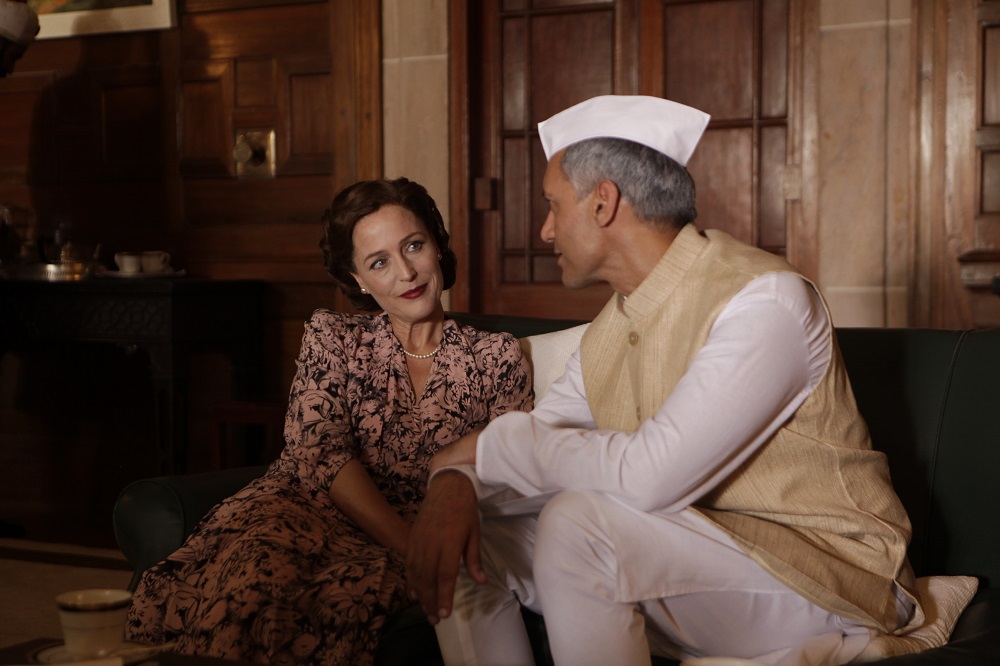 You’ve avoided any hint of an affair between Nehru and Edwina. Why? (Pictured above: Gillian Anderson and Tanveer Ghani)
I didn’t avoid it. I show them sitting quite intimately with looks towards each other. I show they’re very comfortable with each other’s company and that there is an intimacy there. What I didn’t choose to do was bang on about a relationship because I thought that took away from the story that was important to me, the political story but also the ordinary people. For me it was more important to tell the love story downstairs.
What did you carry away from David Lean’s A Passage to India and Richard Attenborough’s Gandhi and perhaps The Jewel in the Crown as well?
These are all films that were part of my education on the British Raj. Gandhi was a searingly important film for me. It was on an epic scale. It was a massive event for us as a community. The Jewel in the Crown of course did attempt to look at the role of the British in India in a different way. All these films have been part of my film education which is precisely why I wanted to set Viceroy’s House up as a sumptuous British Raj costume epic and then start subverting it by focusing on characters who might not have had the importance in other films. Having a foot in both communities I’m able to straddle both sides and hopefully tell you the story from a different perspective. What would you have done in 1947 if you’d been in charge?
Oh my lord. Well I certainly would not have agreed with Mountbatten bringing the date forward. If I had been in charge I would have had more people on the ground listening to what was going on and planned for transition better. But ultimately, I probably would have kept it as one country but made sure that the Muslim minority felt protected.
Did you grandparents end up living in the UK?
No. After my grandfather had spent 18 months looking for my grandmother and the children, he then took them all to Kenya. They had businesses there and they used to go back and forth from India to Kenya. Later my grandfather built another big building in India which is still there but somehow I just don’t feel connected to it. Sadly I never met either of these grandparents and these are stories I was told through their children. I knew my maternal grandmother. She came to live with us, and she had lots of horror stories to tell of that time. I’m told by a friend of mine who is a psychic that my grandfather walks with me. He saw a picture of him and said, "He’s always there standing with you." That's a bit of a freaky comment but at the same time I do take comfort from it.
- Viceroy's House opens on Friday 3 March
Overleaf: watch the trailer to Viceroy's House
Nick Hasted

Two Neapolitans are wrestling for Italian cinema’s crown. Paolo Sorrentino and Matteo Garrone’s rivalry was for a time so personal that, though they were neighbours, they didn’t speak for years.
Jasper Rees

Emily Watson made her remarkable debut in Breaking the Waves (1996). In Lars von Trier’s grim parable, Watson plays Bess, an ingénue from a remote religious Scottish community who, when her husband is paralysed on an oil rig, perpetuates their romantic life by seeking out liaisons with other men and telling him about it. Watson gave the kind of luminous, intense and highly cinematic performance that, along with Hilary and Jackie, found her twice nominated for an Academy Award in the 1990s.
Jasper Rees

Twelve months ago the Academy of Motion Picture Arts and Sciences was the focus of an intense campaign on social media. The hashtag #OscarsSoWhite protested the lack of recognition for black talent at the 2016 Oscars. This year the picture looks a little different, mainly because Barry Jenkins's quietly remarkable film Moonlight has deservedly scooped eight nominations.
Among those nominees is Naomie Harris, who plays Paula, a crack addict in the Miami projects. But the main acting miracle of Moonlight is the trio of performances by Alex Hibbert, Ashton Sanders (pictured below) and Trevante Rhodes, who embody Paula's son Chiron at various ages as he works out how to play the very poor hand that has been dealt him: fatherless, friendless, bullied at school, he is petrified to show any hint of vulnerability.
We first meet him – at this stage known as Little – when he’s befriended by Juan, a kindly street patriarch played by Mahershala Ali (familiar as Remy Danton, the shady lobbyist from House of Cards) who just happens to be his mother’s drug dealer. Even as his problems escalate in the second section, Chiron is given a tantalising glimpse of the warmth that can come off another human. In the third, now known as Black, he has developed a muscular suit of armour and, in emulation of Juan, become the thing he once loathed.
Moonlight is the second film of Barry Jenkins (b 1979) after Medicine for Melancholy (2013). It is expanded from In Moonlight Black Boys Look Blue, a drama school project by Tarell Alvin McCraney, the playwright who has been a strong following in UK theatre with plays like Choir Boy and American Trade. Both men grew up in the Miami district of Liberty City where Moonlight was shot.
The film has already won the Golden Globe in the Best Picture – Drama category, while Mahershala Ali won the best supporting actor of the Screen Actors' Guild on Sunday in Los Angeles (and gave an empowering acceptance speech about religious inclusivity). If 2017 didn’t seem predestined to be the year of La La Land, Jenkins could just find himself making three trips to the podium at the Oscars: Moonlight’s Academy Award nominations include best film, best director and best adapted screenplay. A coming-of-age story about a boy's tentative sometimes violent quest for identity, his film couldn't be in cinemas at a more opportune moment. JASPER REES: Your trio of actors who play Chiron look and move with an extraordinary linearity between the three of them. How did you achieve that?
BARRY JENKINS: I’ve got to give credit to my casting director first. It wasn’t a difficult process of finding these guys. We didn’t have 30 hoops they all had to jump through, but it was an arduous process in that we were looking for this magical alchemy that you couldn’t project, you just knew it when you saw it. Eventually in the course of quite a few months of searching we found these three guys. What we were looking for wasn’t so much physical similarity. We were looking for this essence, this spiritual communion amongst three of them. Eventually we felt like we’d found it. Now in making the film we tried to do certain things. Those three guys didn’t meet. I didn’t allow them to rehearse together, and they couldn’t watch each other’s footage. But there were things that were built into the script and the ideation of the character that were consistent across the three stories, and they did all three have the full screenplay. These Academy Award nominations have just come and what I love about that is they are spread pretty wide across the crew. Everybody played a role in building this continuum. The cinematographer framed them a certain way consistently across the three chapters, especially in very particular moments. The editor did a great job. I told them I want them to be three different people and yet the same thing has to be charging throughout each chapter.
They all have the same wounds.
Exactly. And although they’re often trying to hide them, for me it’s in their eyes. That’s when you see that wounded child, especially when you meet Trevante Rhodes (pictured below) and think, who the hell is this guy? And you can see this wounded child deep down inside.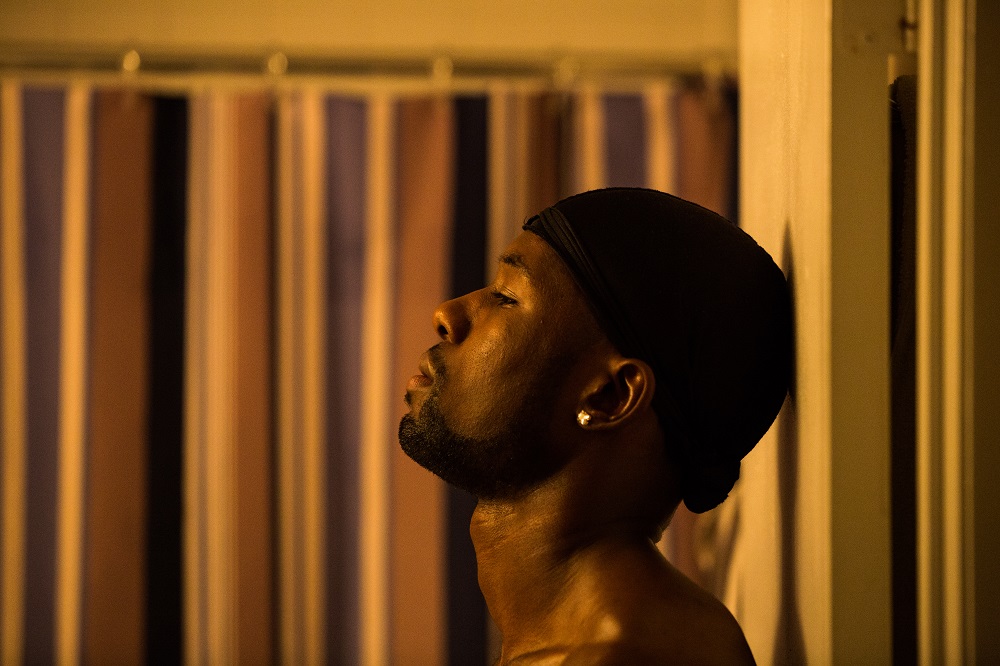 What happened when they did all meet?
It was amazing. They were amazed at how alike they were in personality. It was almost like they were looking at a reflection of themselves in this very cold way. I mean they get along famously.
Is this film needed now?
I don’t know if it’s needed now. I do feel like the movie has begun to serve as a symbol of the kinds of things people want to make sure that we stay aware of now. Let me say this. The movie was written under the previous presidency. It was directed under the previous presidency. Even when it was released it was assumed it would be released under a different presidency to the one we have now. I will admit the film in some way does serve as a symbol, because people write me messages saying they are so glad the movie exists in this present moment as a corrective in certain ways to this idea that we need to rescue the spectrum of what an American is and what an American life is and what an American voice is. This film is a reminder that we should now be expanding what an American life is, and which voices are worth hearing. This movie came out three weeks before the election and it meant a certain thing at that point. I’m speaking of Instagram and Twitter. I get messages from strangers all the time from people telling me what the voice has meant to them. After the election, those messages changed in tone and tenor.
But long before Trump won the Republican nomination, there was Black Lives Matter and #oscarssowhite (pictured below: Naomie Harris).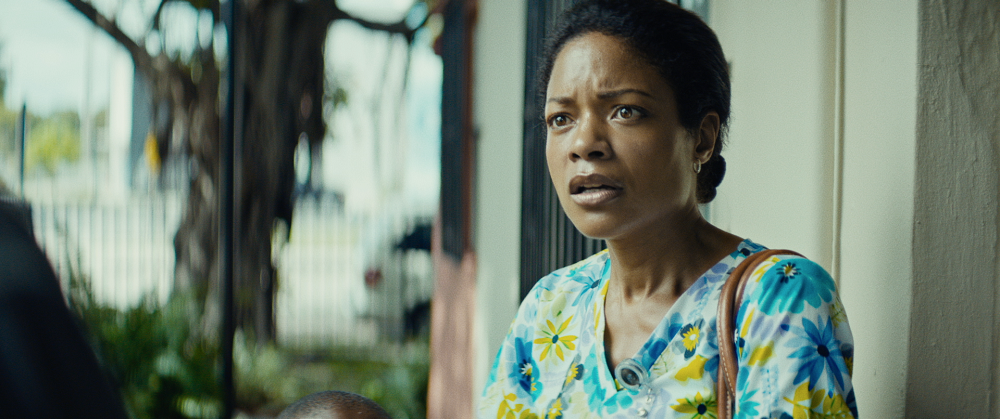 I wrote this in 2013 so it did pre-date some of those things. When Ferguson happened it happened very loudly, by which I mean people were very open about the conversation that was being had in the States and there was this sort of dialogue on what voices needed to be heard. I think what I love about this film is it arrives for the most part as an unfiltered version of mine and Tarell’s voice. I think something happened over the last four years that made that essential. When #oscarssowhite happened last year this was already in the can. Nobody had seen a single frame of footage but somebody wrote an article already commenting on the film as something that could be a corrective to those things. It doesn’t alter the way I approach the work. But I did realise whatever became of the movie something was going to be changed.
Almost exactly a week ago to the minute the new president of the US used the phrase “American carnage”. What did you make of that?
What it did for me was it crystallised what I felt was the president’s perspective on what America is. And I think for the president there were certain things that are taking place on the ground. There are people who are very actively engendering the spirit of community across the US and they’re doing it primarily in communities that the president would say are the bedrock of that carnage. And so there is a cognitive dissonance, or there might just purely be a distance between this president and the people he presumes to represent. And that was what I saw in that statement, and it was frightening, because this president has shown a temperament to meet carnage with carnage. And so if he’s projecting the idea about what he sees it gives me pause about what he’s doing to do to address it (pictured below: Barry Jenkins filming Moonlight).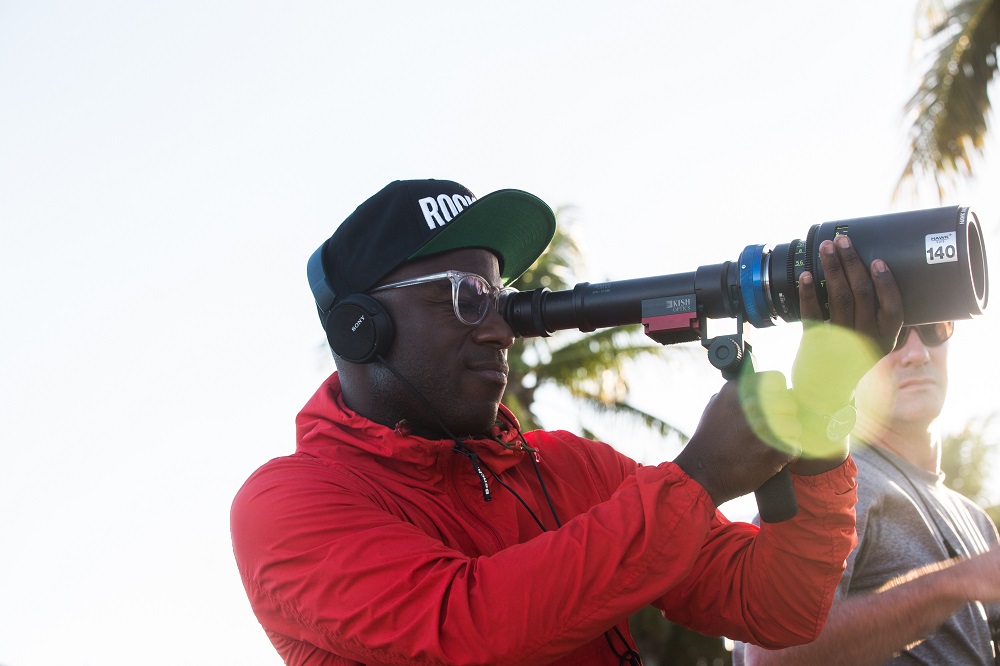 Spike Lee said of Chi-Raq that ultimately he wanted to get the movie to the people that it’s about. Do you have a conception of who you want Moonlight to be seen by?
There’s two different answers. One, in the making of the film I’m only making the film for an audience of two, myself and Tarell McCraney. I’m trying to be as truthful as possible, as in tune with our voices as possible, which to me is the voice of Chiron. That’s who the movie is for. Now the movie is done, I think the person who can literally see themselves in this film is the most important person to see it. We’re surrounded by screens all the damn time. If you don’t see yourself reflected on enough of those screens two things happen. One, you begin to feel very very alone. And then two, you begin to feel in some ways invisible, because there are other people all over the world who are watching these screens and if they don’t see you on it they then start to believe you don’t exist.
But then I do think the gift that cinema gave to me is showing me how small the world truly is. I didn't grew up obsessed with film and when I was in film school I fell in love with the medium through watching foreign films, primarily the work of Wong Kar-wai and Claire Denis. We were watching Happy Together and being moved by this film about two Asian men living in Argentina in a same-sex relationship. Couldn’t be farther removed from my world and yet I was feeling things. Now that this film is done that I want it to serve in the same way as Happy Together served for me. Here we are in London and yet you can go to the cinema and take a trip to Miami and see how small the world truly is.
You filmed it in Liberty Square where both you and Tarell McCraney grew up. Why was it you wanted to film there and what happened when you did?
So much of the source material was about the place. Tarell has done a great job of capturing the mood of what that community is. Liberty City is the neighbourhood in which the Liberty Square housing project is set. In some ways it’s static. It hasn’t changed a lot in the last 50 years. And then there was just so much about it that I remember. As a filmmaker you often try to imagine what the light is going to be like, how the location is going to feel. I didn’t have to imagine. I knew exactly what it was. There was no other place this movie could be set. Once we got there this really interesting thing happened. This distance I always have between my personal life and my artistic life began to get blurred. And now I think because I’m embracing that blurring of the selves, I think the craft, the aesthetic of the film, went to this place that I couldn’t intellectually have projected that it would go. I think the work became better, more visceral for it.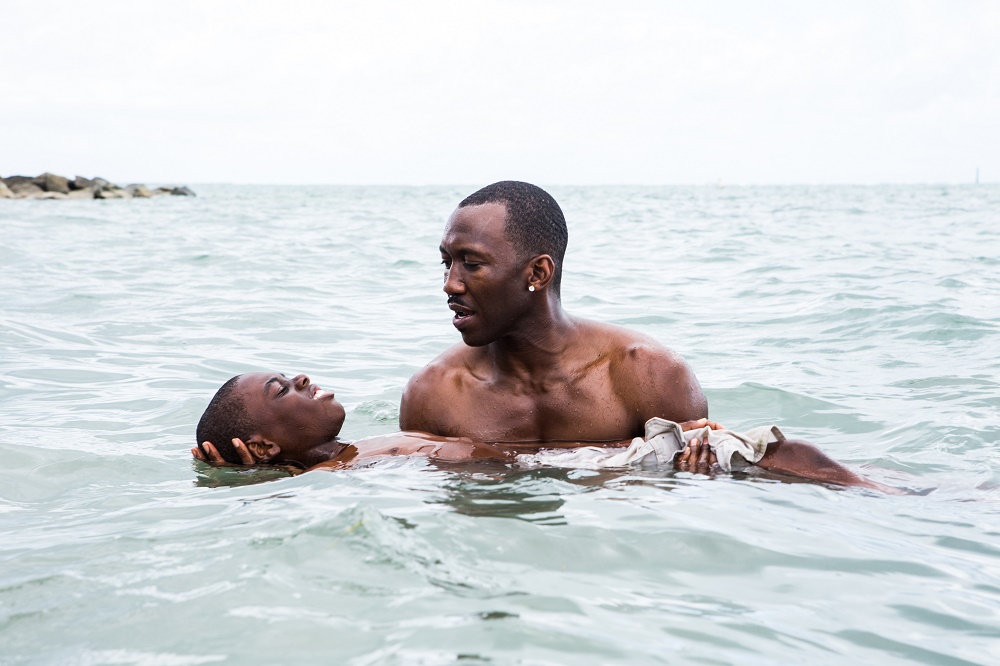 There is a beautiful scene in which Juan teaches Little to swim. Why alight on swimming in particular? (pictured above: Mahershala Ali and Alex Hibbert).
Tarell in the source material has written two scenes. There was the swimming lesson and there was learning how to ride a bike. I was much enamoured visually with the idea of a swimming lesson. This character Chiron doesn’t really trust anyone. When you’re out in the ocean you’ve got to trust two people: the person who’s teaching you, and you have to trust the water. Also in Miami we’re surrounded by the ocean. It was a very concrete place to have this moment of spiritual transference between Juan and Little. What I love about that scene is a lot of things in the making of this movie are method. Alex Hibbert does not know how to swim so what you’re watching when you watch that scene is Alex Hibbert getting to a place where he can trust Mahershala Ali to not let him sink.
You seem to romanticise or idealise the figure of the drug dealer. These guys with these big armoured bodies – Juan and later Black – have within them this kind heart. Was there ever an anxiety that you were giving these guys a free pass?
True, and I love that Chiron basically poses the same question that you’ve posed to me. Why are you forcing me to romanticise you? Don’t you sell my mom drugs? But it’s a valid question. The whole piece arises from Tarell’s friendship, paternal relationship, with a drug dealer so the romanticisation is a reflection of the life that Tarell lived. The character Juan is based on a real person. Just because it happened doesn’t mean it’s acceptable art. That was where I was taking my cues from and I do think that the character is brought to his knees through the mouths of babes. Little illustrates exactly what you’re talking about. With the character of Black I do think it’s a front. We state very clearly why and how it’s a front. Even in the romanticisation I do think the other characters around him do eventually tear him down.
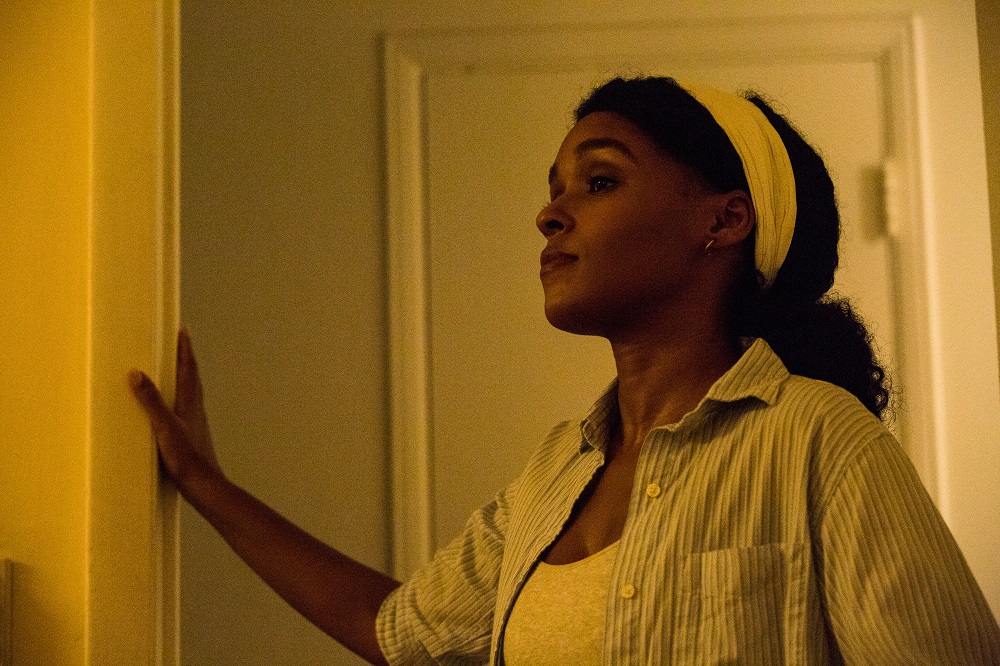 This is a film about men and boys but you have two actresses giving great performances: Naomie Harris and Janelle Monáe (pictured) as Juan's saintly girlfriend Teresa.
With both of them it was about having a presence that felt true. Neither one of them is given a very easy take. Janelle is playing Teresa, a woman with a heart of gold, and yet she is living with this drug dealer. I do think both Naomie and Janelle do a great job of embracing the vice and virtue at the core of the characters.
Did Janelle Monáe worry about that?
No no. Janelle has that actual experience in her life. She’s the arachnoid space-age musician but she’s from this very small rough place in the Midwest and so she understood who the character was. The interesting part was Naomie did not understand who the character was but she was willing to make the journey to find the heart and the empathy in playing Paula. She actually has the opposite task of the young men. She is embodying the same character across three chapters and I think she’s the foundation of the piece.
- Moonlight opens on 17 February
Overleaf: watch the trailer to Moonlight
Jasper Rees

Jasper Rees

On screen, two hoodlums in macs and homburgs debate the best way to waste a victim. One of them, played by Peter Sellers, proffers a revolver. The other, who from under his hat has something of Herbert Lom about his profile, pulls on a cigarette and shakes his head. How about the acid in the bath routine? Another shake of the head. Case him in cement and drop him in the river? No. Sellers’ gangster is bemused. No gun, no acid, no cement: so how’s he going to do it?