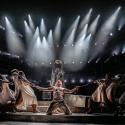
That this 1948 Tennessee Williams play is rarely performed seems nothing short of a travesty, thanks to the awe-inspiring case made for it by Rebecca Frecknall’s exquisite Almeida production. Aided by the skyrocketing Patsy Ferran, it also makes a case for director Frecknall as a luminous rising talent in British theatre.
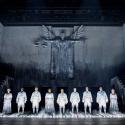
During a long, hot summer in early 20th century, small-town Mississippi, minister’s daughter Alma (Patsy Ferran, pictured below) – whose name means “soul” in Spanish – yearns hopelessly for the boy next door: dissolute doctor’s son John (Matthew Needham), who believes only in obeying the body’s urges. There are other complications, too: a childlike mother (Nancy Crane) whose breakdown has reversed their roles, essentially stealing Alma’s youth; and Alma’s own mental health issues, manifesting in nervous tics and panic attacks.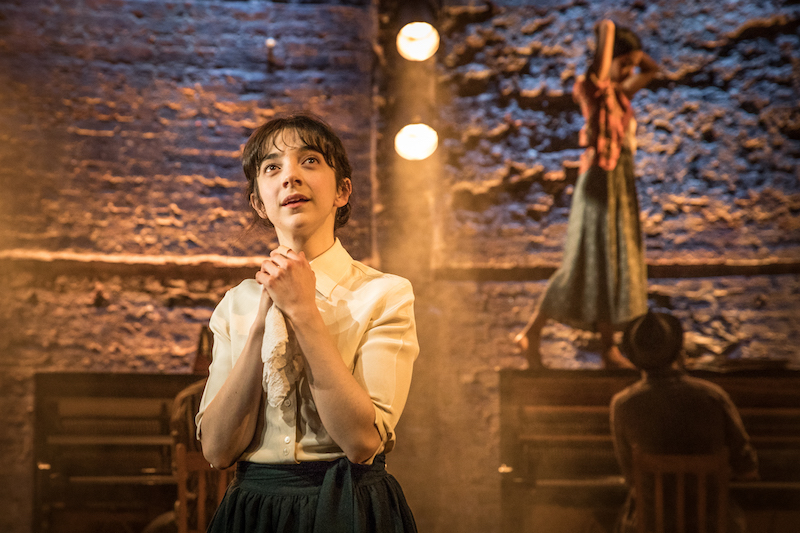 Frecknall surrounds the actors with a semi-circle of nine pianos, and Angus MacRae’s gorgeous, nuanced compositions – played by the talented ensemble – become a seamless extension of the drama. They tug at Alma’s longing, buffet her raging despair, or slyly introduce the temptress Rosa, daughter of a local casino owner, whose willingness to embrace John’s frank carnality contrasts with Alma’s puritanical cage. Microphones distort voices over phone calls, or amplify deeply felt moments or memories.
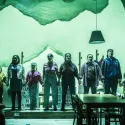
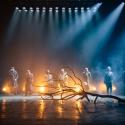
Tom Scutt’s minimalist design (featuring just a few props and no costume changes) is articulately lit by Lee Curran, allowing the action to flow continuously – the hazy, golden summer days spilling into one another, and the intensity of Alma’s experience uninterrupted. It’s frequently hilarious, as when nervy Alma chatters on in learned small talk that baffles John, or responds to his health enquiries with the evasive “I have a touch of malaria lingering on”. Such exchanges richly convey the awkwardness of blossoming desire, as well as the agony of its thwarting.
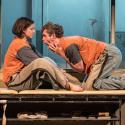
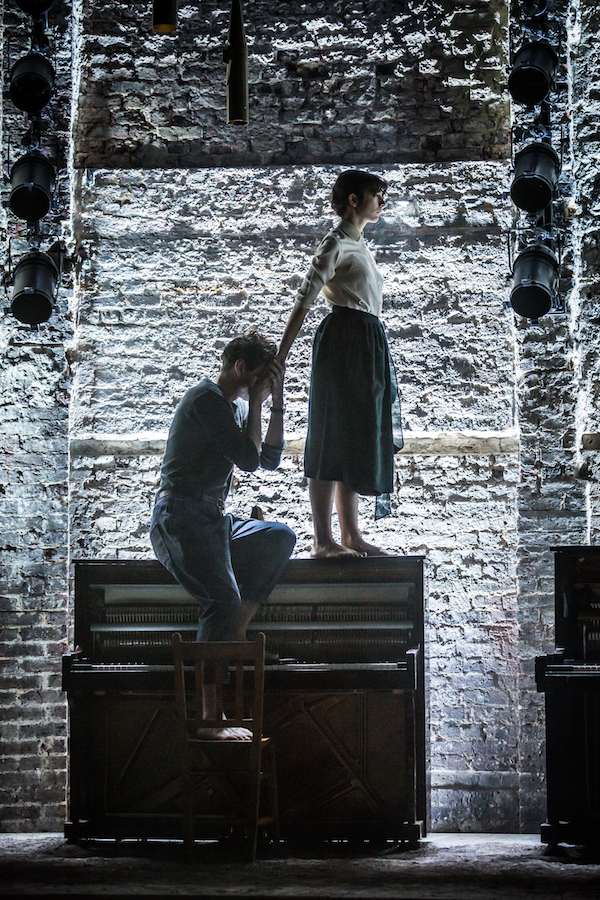 It’s a virtuosic turn from Ferran. Her callow Alma is (literally) buttoned up and affected, all big eyes and clumsy elbows, yet passion constantly roves beneath the surface, looking for an escape route. She throws in continual gulps and shivers without seeming mannered, and finds heart-stopping power in each realisation on Alma’s path to self-determination: that she envies John’s ability to practise medicine and find purpose; that there is a middle ground between self-denial and indulgence; that love is “what you bring to it”; and that sometimes, the puzzle pieces just won’t fit. (Matthew Needham and Patsy Ferran, pictured right)
Her scenes with John have extraordinary intensity, and credit to Needham for bringing such unpredictable energy to the character – there’s a real element of danger in his seduction – and, later, a difficult, candid soul-searching. There are also wonderful turns from Nancy Crane as both a catty neighbour and Alma’s deliciously mischievous mother (bribed with ice cream and cigarettes); Forbes Masson as a pair of distinct but equally despairing patriarchs; and Anjana Vasan as Alma’s amusingly unfiltered singing pupil and the sensual Rosa.
Thankfully, Williams takes pains to humanise Rosa, as he challenges the lazy binaries by which women are so often defined: prude or slut, angel or devil. Rosa is seeking to escape a chaotic home life, just as Alma feels trapped by her domestic sphere – often backed by the unrelenting ticking of a metronome. The evening is teeming with such superb expressionistic touches; in a fatal moment, the stage is flooded with white light and unexpected music bursts forth. It’s transcendent.
A perfect mix of poetic and grounded, Frecknall’s tender production imbues the smallest of human interactions and choices with enormous power: the exchange of a handkerchief, the tentative dance towards a kiss, the undoing of a button, the dawning of a new desire. Exceptional theatre.
- Summer and Smoke at Almeida Theatre until 7 April
- Read more theatre reviews on theartsdesk