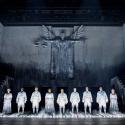
Transferred from the Royal Court to the West End, this is a very tight staging of a very messy evening. Ten members of the Riot Club come together for a celebratory meal after “two terms out in the cold”. In a modest pub on the outskirts of Oxfordshire, they hang a bin bag on each chair, down their wine by the bottle and start on a 10-bird roast. The plan: to get “absolutely chateauxed” and trash the place in the traditional manner of their aristocratic ancestors.
When Laura Wade’s play first opened, polling day for the 2010 General Election fell in the middle of its run, and reviews mused over whether this was a glimpse of our Conservative future. Two years later, she has gently re-worked it to include references to the Coalition, and the Greek member of the club is mocked for his country’s bankruptcy. Not meant as an exercise in toff bashing, Wade explores the idea of a group of people “having to stick together in a world that doesn't want or understand them any more”. However, revived in Cameron's austerity Britain, the events carry a far more political resonance.
The set design by Anthony Ward is spot on - a Farrow and Ball, gastropub version of posh dining – while the musical interludes are hilarious: the British tradition of the beatboxing trustafarians is used to great effect, the boys posturing like hip hop stars in three-piece suits. The all but colonial desire of the public schoolboy to win ownership over ghetto style is powerfully enacted.
It is impossible to tell whether the occasional moments of gentlemanly decency are felt or learnt
David Cameron, George Osborne and Boris Johnson were all members of the Bullingdon Club when they were at Oxford and here we get a sense of the kind of behaviuor that may have shaped our current government. At the start of the meal, peevish and unlikeable Toby (Jolyon Coy) wears “the wig of shame” for past misdemeanours that yielded an unflattering Daily Mail front page. His letter of apology, read out to howling peers, is strikingly similar to the various post-scandal acts of contrition witnessed in parliament.
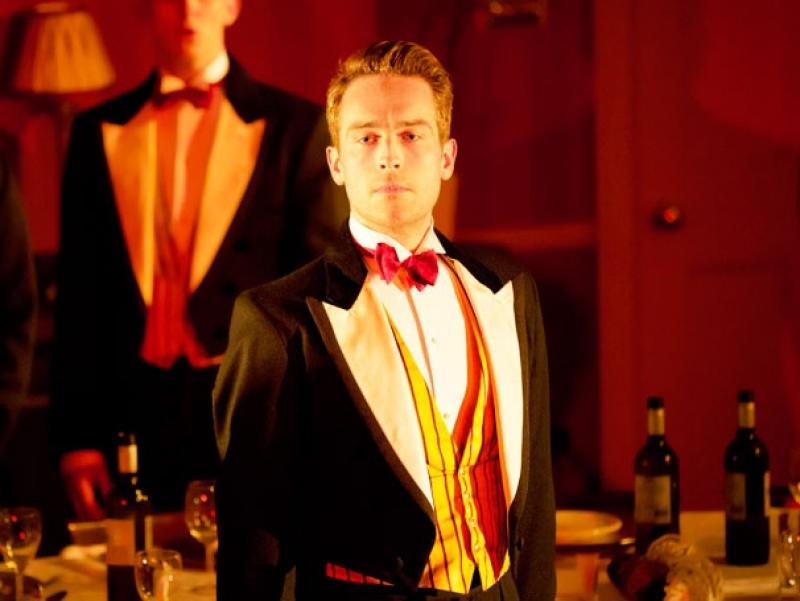 A criticism originally levelled at the play was that the characters were too uniformly awful and lacked any moral shades of grey. Subtle alterations have been made and while Leo Bill's Alistair remains bitterly intense and resolutely unloveable, the others squirm ambivalently at his more outrageous suggestions. It is impossible to tell whether the occasional moments of gentlemanly decency are felt or learnt. From Riot Club chairman James Leighton-Masters down (Tom Mison, pictured right), these boys understand the necessity of adaption and disguise and are very skilled at it. The actors achieve perfectly the veneer of expensively honed charm that an Old Etonian can summon. The talent is crucial to their survival and indeed to the success of the play itself, which can work only if we find ourselves occasionally liking some of them and even feeling for them. Luckily, frighteningly, we do.
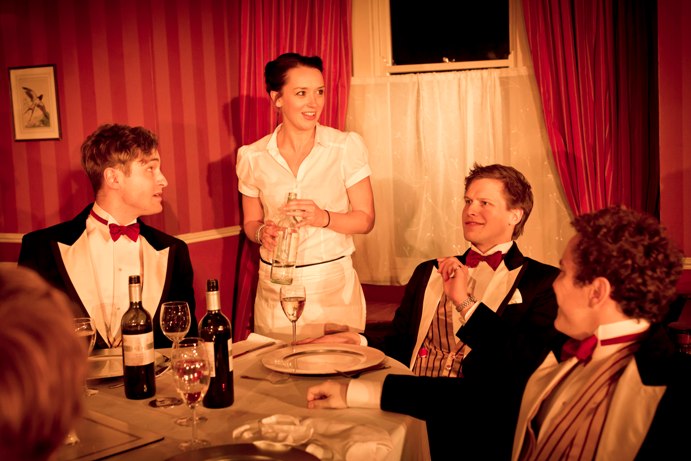 But the drunker they become, the more their charm recedes. Tired of being forced to hide and apologise, they search for ways to re-assert their authority. Alistair's announcement that “I hate poor people” sends the audience off into the interval with the tension ratcheted up. The object of their hatred is pub landlord Chris, played to perfection by Steffan Rhodri. His daughter Rachel (Jessica Ransom, pictured above), their mildly contemptuous waitress for the evening, has ridden Blair's wave of meritocracy (or as the boys see it, mediocrity), social mobility giving her access to university and a first-class degree from Newcastle. Like the prostitute the boys sneak in through the window, she is fully aware of her rights and has no intention of being pushed around by a bunch of poshies.
The play which is written and directed (Lyndsey Turner) by women locates in its female characters the new world the boys fear, a world wich neither respects nor needs them. And yet while mayhem ensues, the simmering class and gender conflicts never really explode; the awaited confrontation never quite happens and the room trashing doesn’t carry the required cathartic power. In this sharp, intelligent and original production we hover so close to a place where this timely and important subject could be taken into uncharted territory that a descent into random violence, however extreme, somehow doesn’t seem enough.