So why not rewrite The Magic Flute with a new text and a heavily reconstructed plot? After all, the original was just a pantomime, albeit one that embodied one or two big issues of the day (1791), but essentially popular theatre with a text by a well-known comic actor, Emanuel Schikaneder, who sang and acted in the first production.
Remodel the plot, by all means. Make Sarastro and the Queen of the Night into an estranged couple who have fallen out over the education of their daughter Pamina. Make Tamino and Pamina into childhood playmates who have lost touch and Papageno into the former bird-catcher of her parents’ palace. Rethink Monostatos as a gay university lecturer specialising in scientific gobbledygook (at least it avoids having to have him as a bad black man). Finally, have Sarastro and the Queen reconciled at the end. If you absolutely must.
But don’t, please don’t, come up with the newly minted doggerel, littered with clichés, mixed metaphors, ungrammatical genderings and off-target rhymes, of Daisy Evans’s interminable, recomposed libretto for her new production of Mozart’s great singspiel at WNO. Evans seems to make rather a thing of re-plotting operas (remember her Traviata at Longborough). But it’s a dangerous game, not least if you combine it with a staging devoid of the moral and dramaturgic clarity that is the hallmark of the original, for all its pantomimic mixture of slapstick comedy and homely philosophising.
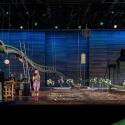
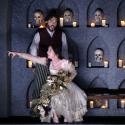
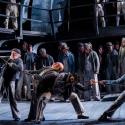
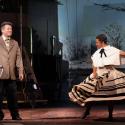
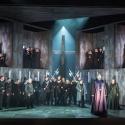
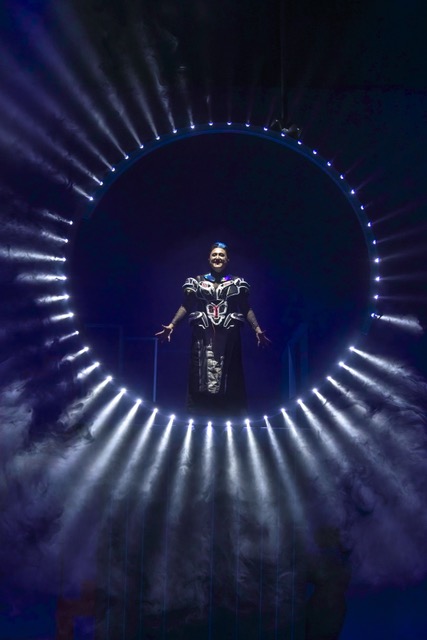 Merely to watch, this is an exhausting, in the end somewhat tedious experience. Coloured balloons float about, paper birds flutter on the end of long wands whisked around by ostentatiously ballet-school dancers, neon lights flash, sometimes making (Masonic?) triangles, sometimes arrows pointing the way: the whole thing, designed by Loren Elstein, is a feast for the eye followed by indigestion, as the good and the evil get hopelessly entangled, Sarastro’s followers are presented as drugged-up geeks, or at best failures in the quest for enlightenment, and meanwhile the aesthetic atmosphere resembles nothing so much as an old-fashioned boy-meets-girl sitcom in which the Armed Men discuss last night’s match and Pamina whines to her “father” that she misses her mum.
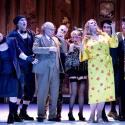
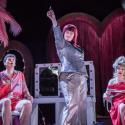
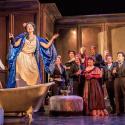
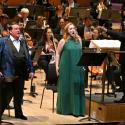
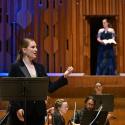
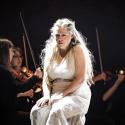
The farrago might be redeemed by strong casting, but WNO have very uncharacteristically taken the opposite line and trusted to the work’s popular appeal to get them through. Of the main cast, only the Tamino, Trystan Llŷr Griffiths, and (at least in her upper register) the Queen of the Night, Julia Sitkovetsky (pictured above), are up to the standard we normally take for granted with this company. Raven McMillon sings Pamina nicely enough but without depth of tone, and Jonathan Lemalu (pictured below) is a lightish baritone Sarastro with some good bass notes. The Papageno, Quirijn De Lang, is poorly served by a text that confuses his best moments and draws his dialogue out to lengths beyond his ability to entertain. Vocally he is agreeable, at times unsteady, and often troubled by a wordy text that doesn’t always lie well on the notes.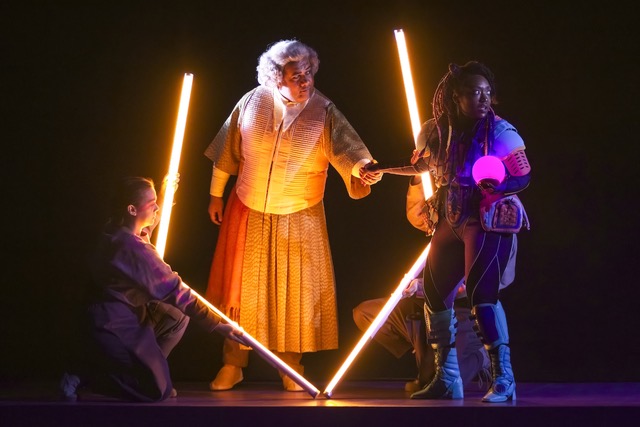 Other changes? The three boys become three girls regendered as “young ones”, and they unforgivably lose their most beautiful number, at the start of the Act 1 finale, played here only by the orchestra up to the vocal entry. All the same Sophie Williams, Carys Davies and Llinos Haf Jones do a nice job with suitably boyish tone, while Nazan Fikret, Kezia Bienek and Claire Barnett-Jones are a fine, mercifully orthodox, trio of actual Ladies. Alun Rhys-Jenkins camps Monostatos up as required and delivers a sparkling Act 2 aria, deprived, though, of its context. The Armed Men, Thomas Kinch and Laurence Cole, are excellent in their big moment at the gate, though the ordeals themselves are somewhat lost in the general mayhem. The Speaker, Chuma Sijeqa, has good, dignified presence, but speaks less than clearly, an irony that in turn speaks for the whole production.
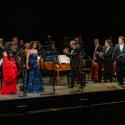
The orchestra at least is in top form, though tested by some of Paul Daniel’s tempi. The overture, accompanied by an incomprehensible Daisy Evans back story, rockets along as if pursued by the Erl King; at other times the music seems upstaged by the goings-on beyond the footlights and the long, long dialogue. To turn late Mozart into incidental music is quite an achievement, but not one to relish.