Californian saxophone phenomenon Kamasi Washington is never knowingly understated. He rocked up for his Proms debut on Tuesday night having led a vast musical entourage on tour across Europe all summer, and delivered an ecstatic, if occasionally verbose, statement of intent. There were problems with both the performance and one or two of the compositions. But as a live experience, it was, in places, euphoric. Only a determined curmudgeon could leave without a grin.
We were treated to some highlights of last year’s album The Epic. The title doesn’t disappoint, in terms of ambition, at least. Though generally compared to John Coltrane, Pharoah Sanders and Sun Ra, Washington isn’t yet in that kind of company on any objective musical terms, though his role in connecting the world of jazz with credible projects in more popular neighbouring musical fields such as Kendrick Lamarr’s To Pimp a Butterfly (which he partly arranged) is also valuable. He offers a kind of soul-jazz bear-hug of soaring, ecstatic melody lines pillowed on string and choral arrangements that are either tenderly passionate or simpering. He tends to polarise opinion.
Washington lifted the hall to a higher, more beautiful place
The album is uneven, and some pieces are flatly sentimental. But in a way that misses the point. His whole project is about transcendence, and giving fans several kilos of triple-vinyl release is only the start. His warmth and ambition are excitingly tangible, and make it easy to forgive some of the grandiloquence.
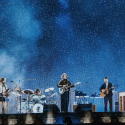
“Next Step”, “The Rhythm Changes” and especially “The Magnificent 7” all sounded more urgently spiritual live than on the album. When the focus was on the solo instruments, the Albert Hall’s meandering acoustic was a perfect match for Washington’s snaking solos, floating eerily around the ceiling. Most of his recording band were also touring, and there were memorable performances from trombonist Ryan Porter, drummers Ronald Bruner Jr and Tony Austin, pianist Brandon Coleman, and Washington’s father Rickey on flute and soprano saxophone.
Conversely, when the choir and orchestra had a more central role, the balance became very difficult to manage, though the forces at Jules Buckley’s disposal were similar to those on the album. On record, “Change of the Guard” is a sonic souffle, all delicate layers of sound. Live, it was, sad to say, a curdled, lumpy thing - though also the first piece in the programme, and perhaps levels hadn’t yet been fully balanced.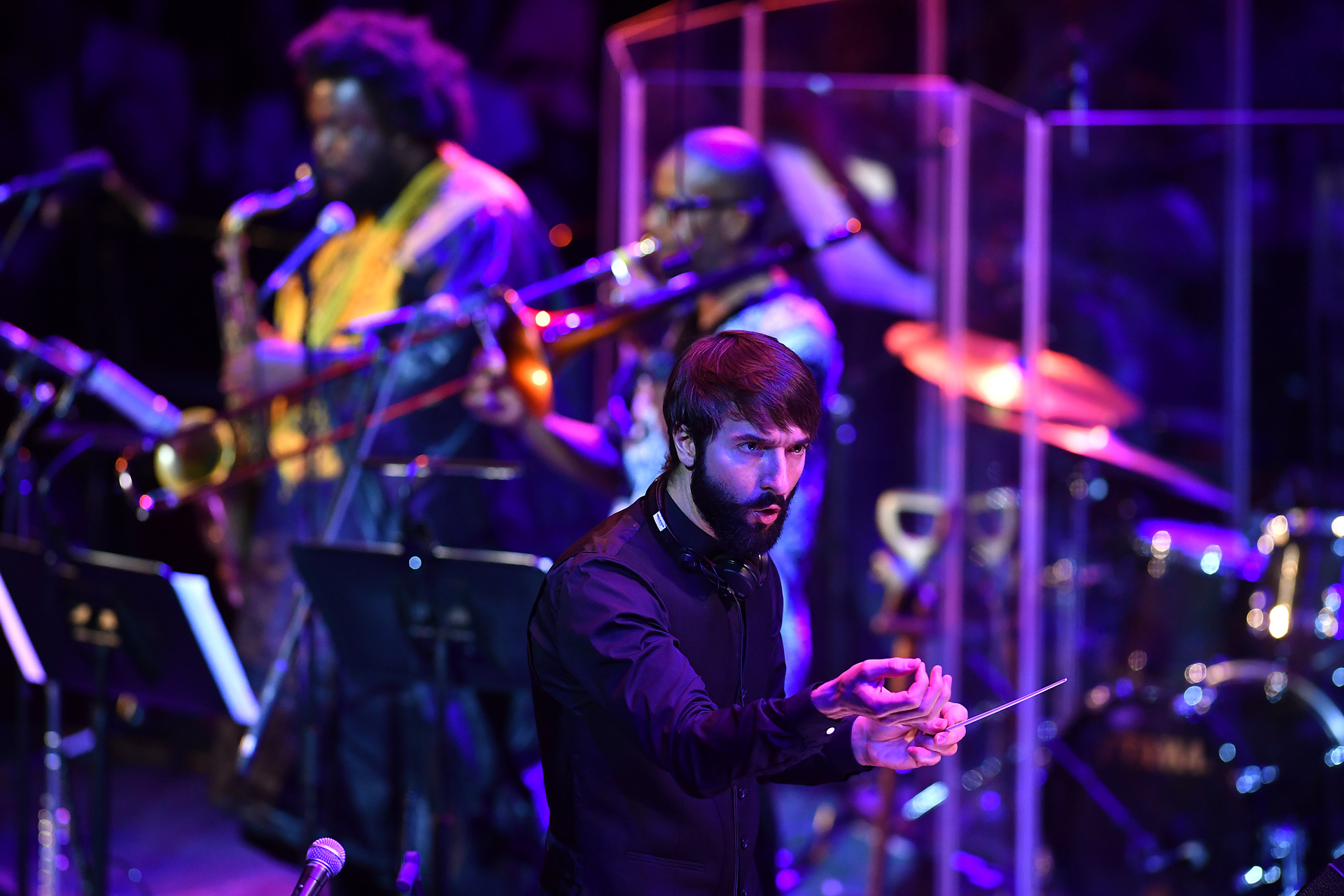 The one new piece, “Space Traveller’s Lullaby”, was a kind of aerated choral waft, the sort of music a very stoned Vaughan Williams might have written. Simpler in structure than “Changing of the Guard”, it used the choir very effectively, without the tussles of that first piece. The most taut and focused works, however, both as compositions and in performance, were for Washington’s octet, which had no difficulty filling the hall on its own.
Jules Buckley (pictured above right) is embarked on an important project in his expansion of the non-classical orchestral repertoire, though in Washington’s case, and in this particular setting, the beast was untameable. It probably would have worked better either with just the core band, or with very reduced strings and choir, which couldn’t have threatened to overpower the wind as they briefly did. Yet, despite all this, there were moments of enduring magic, when Washington lifted the hall to a higher, more beautiful place.