

There is a sense of loyalty from the Brighton audience awaiting Hofesh Shechter’s new work. They have seen his company here in 2009, for the Brighton Festival commission of The Art of Not Looking Back, and the infamous Political Mother premiered here for the Festival in 2010.
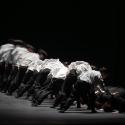
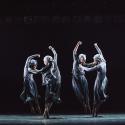
There was a feeling that people were waiting to be wowed – and they were not disappointed. The piece opens with a person being shot against a dark wall, which then divides into two. Immediately my thoughts are drawn to the divisive Israel/Palestinian conflict, a theme which the Israeli-born choreographer has dabbled in before now. It's an interpretation I drew on throughout, in the signature unison work of low-slung slinking and creeping, caged arms and deep pliés, the gunfire percussion, a nod to traditional dancing and positions of surrender.
You can’t understand the order if you don’t know the chaos
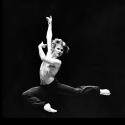
There is humour, pathos and an indefatigable energy from the company. In particular Attila Ronai, whose stamina and vigour are wildly impressive, and Yeji Kim whose dedication to character is extraordinary.
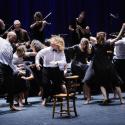
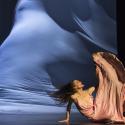
Shechter has a great way of building energy from chaos. Just when you’re wondering what on earth is going on, why the dancers seem to be re-creating any night in a club, they come together in powerful alliance to perform with power and spirit. The climax of energy, both physically and musically, structures the two-act piece. In the first half, there is a sense of slowing down – there are yoga poses and softer moments. But things get sinister after the interval. Women are held like rag dolls, men dragging them around long after they’re dead, until their bodies are piled up at the side of the stage. It seems like a sage comment from the choreographer, one that’s saying: “You fucked up. You got it all wrong. But you can’t take it back now, can you?”
When at times it does get a bit too chaotic – the revolving wall and the carried bodies; the dancers’ mouths open in Munch-like screams; singing and surrendering – there’s a clear message that you can’t understand the order if you don’t know the chaos.
Classical musicians wearing life jackets play against the percussive score; bubbles fall from the sky, and the heads of the dead bodies strewn across the stage, pop back up as if to ask “Is anyone watching?” The final bows – cheeky finger guns at the audience and the grandiose sweeping to the floor could relate to any kind of current affairs, whether in the Middle East or the USA. And therein lies the genius of Shechter – the portrayal of beautiful chaos that allows the viewer to glean some kind of tangible narrative that resonates long after the final bows are taken.


Add comment