

The last time I heard Beethoven's setting of Schiller's Ode to Joy in the finale of his Ninth Symphony, it was as European anthem at the end of this May's Europe Day Concert, and everybody gladly stood. That hopeful occasion was distinguished by Andrew Manze's Rameauisation of the melody, stylishly played by Rachel Podger and the European Union Baroque Orchestra. We've been through the mill since then, so last night it was appropriate to hear before it not only the rest of Beethoven's initially turbulent drama in Vladimir Jurowski's typically unusual vision, but also the fraught fanfares of Magnus Lindberg's Two Episodes, a BBC co-commission tellingly to be repeated in Helsinki and Porto.
Unless the Beethoven references are plain, it seems like megalomania to advertise your new work as a complement to the Ninth. Other than the final change of direction towards where Beethoven's symphony so radically starts, the only sounds audibly homaged in the Lindberg premiere were those of early 20th century French scores, ravishingly delivered by the London Philharmonic strings in multi-divided chords. Where Boulez moved on from that coloristic starting point, Lindberg seemed mired in anachronism. First trumpeter Paul Beniston's opening top line was brilliant and arresting as usual, and Jurowski kept an immaculately-prepared performance rhythmically taut and instrumentally well balanced. But who Lindberg really is these days, and what if anything he had to say with this insubstantial curtain-raiser, remained open to question.
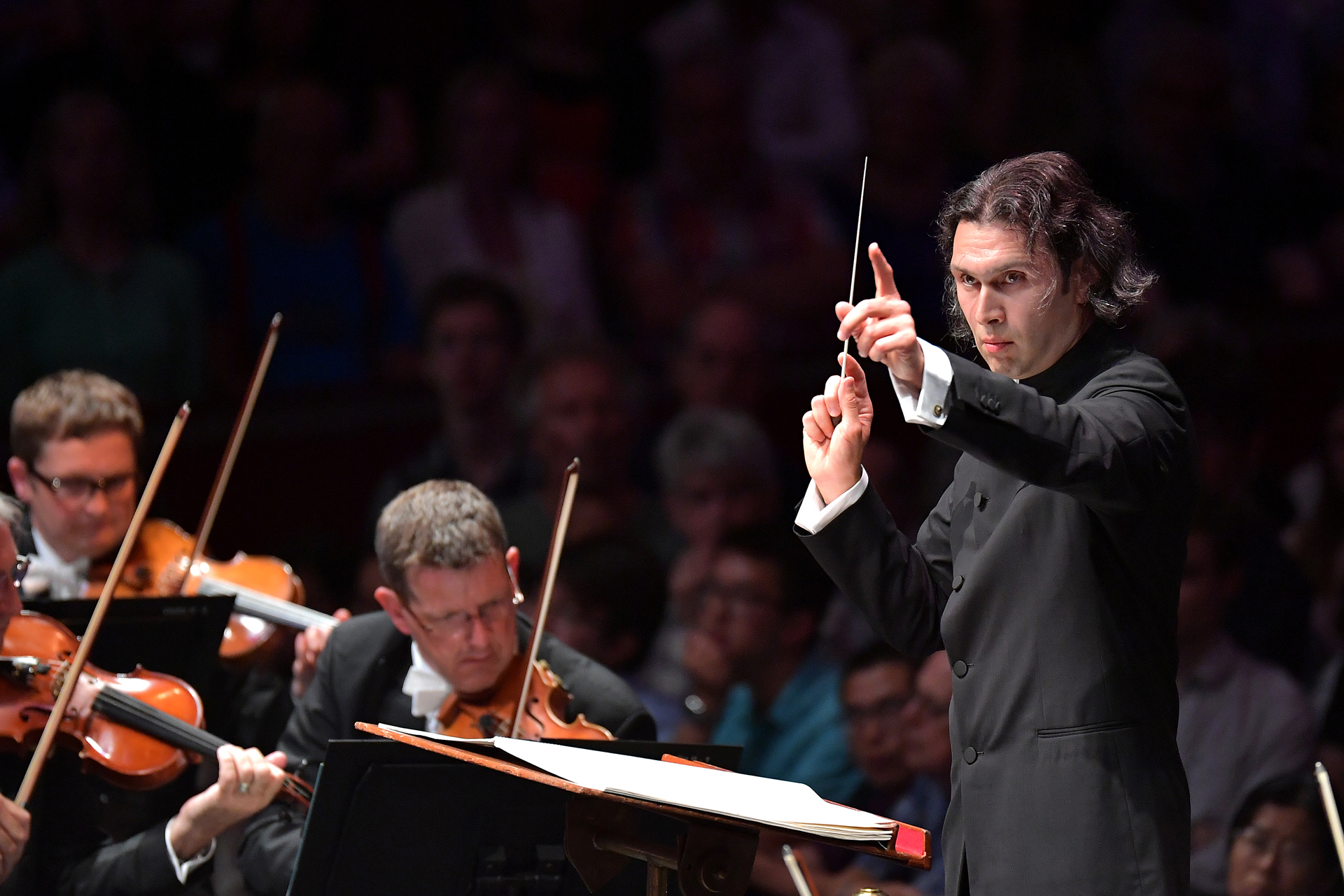
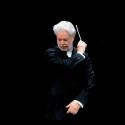
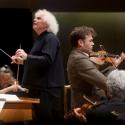
The explosion bars in to the Ninth was relatively contained, the whole first movement fleet and nimble, applying period-instrument lessons to a very modern orchestra of rainbow hue. Every detail found itself revealed by lightning flash, with the thunder reserved for the great pedal points as development hurtles into recap. Simon Carrington's irreproachable timpani work, with some fabulously toned gun cracks in the scherzo, surely worked all the better for his placement alongside the woodwind. Jurowski's other special care (the conductor pictured above) went to the double-basses, placed behind the cellos and halved in the very human recitative of the finale before the back desk joined in for a hushed preview of the "Ode" theme. You could have heard a pin drop in the Albert Hall for one magical minute.
Most remarkable was Jurowski's swift but never rushed flow in an Adagio that was more Andante throughout - the polar opposite of Juroswki's great predecessor at the LPO, Klaus Tennstedt, and in this listener's opinion, all the better for that. Flawless horn work from John Ryan and his colleagues crowned this air-treading wonder.
 So far, so miraculous, with the orchestra moving as one under its admired principal conductor's meticulous guidance. I was reminded of Eduard Hanslick's remark on Hans von Bülow's conducting the Meningen orchestra "as if it were a little bell in his hand".
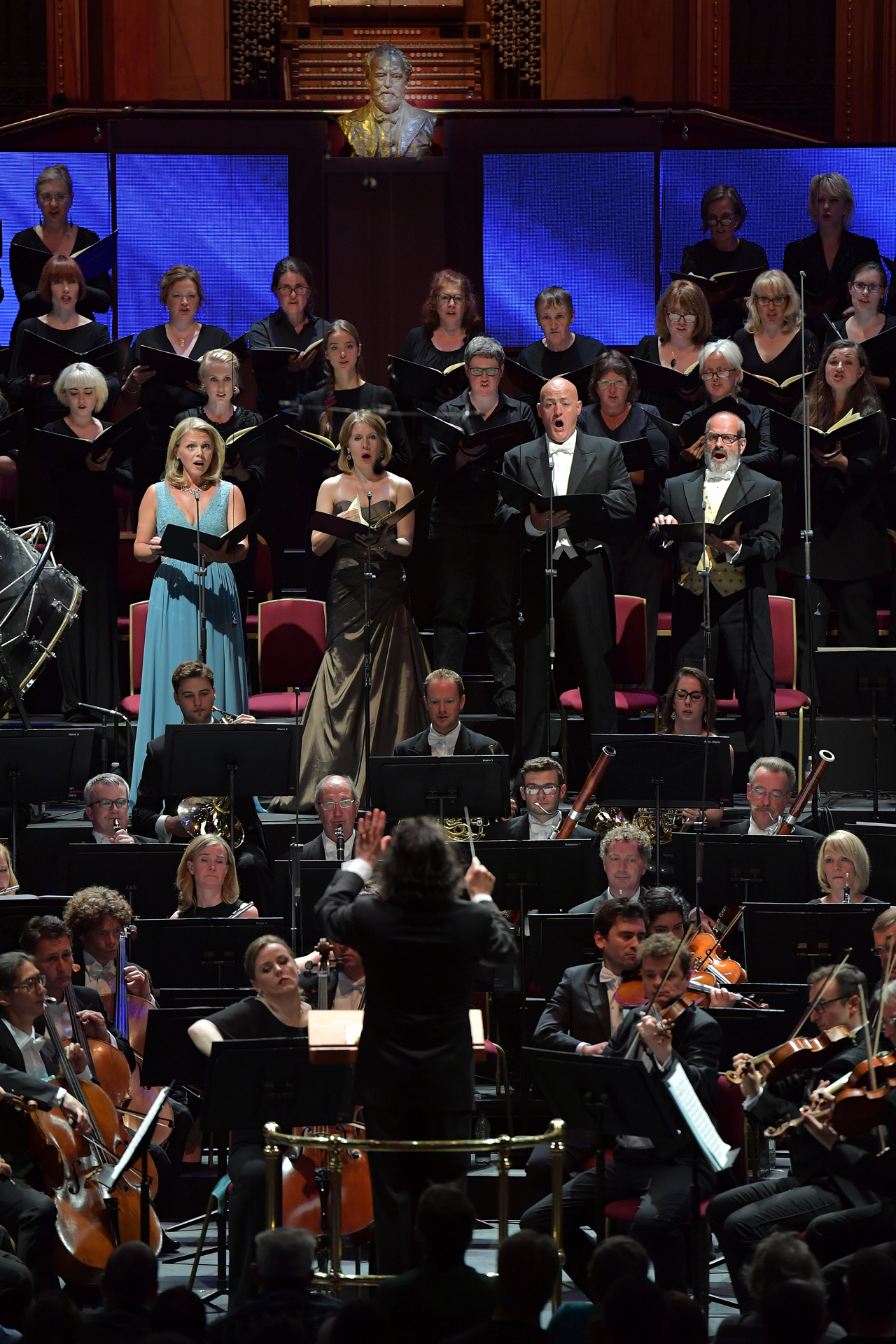
Enter the vocal soloists, though, and we had a problem - partly that of blend, but also one of focus and lustre (pictured left: Miah Persson, Anna Stéphany, John Daszak and Christopher Purves). There's no need to mention names and point fingers about any shortcomings, but bearing in mind that youth has been the chief mover in Saturday protests against Brexit, waving EU flags from Trafalgar Square to the Houses of Parliament, wouldn't it have better to have marshalled a quartet straight out of the music colleges? Some claim this is too hard a sing, but under Jurowski's clean-balancing watch, it needn't have been so. Still, the London Philharmonic Choir, if not as resplendent as the larger forces of the BBC National Chorus of Wales the previous evening, held the centre, with spirited attack on "Brüder" ("Brothers"), and the carefully chosen blue silk effect of the LED strip at the back seemed to billow behind an appropriately Dionysiac conclusion.




Add comment